Why a school mattress factory matters more than most buyers expect
Buying from a School mattress factory is not just a sourcing exercise. For schools, dormitories, training centers, and other shared sleeping environments, the mattress choice affects hygiene, comfort, replacement cycles, storage logistics, and, in some cases, compliance with institutional purchasing rules. A mattress that looks fine in a showroom can become a problem if it is hard to clean, awkward to move, or built for the wrong duty level.
That is why many procurement teams now look beyond price and ask more practical questions: Can the factory make a Custom School mattress in the size and profile the institution actually needs? Does the factory understand bulk packing, repeat orders, and export documentation? Will the product survive daily use by a rotating group of students or guests, not just a carefully staged sample room?
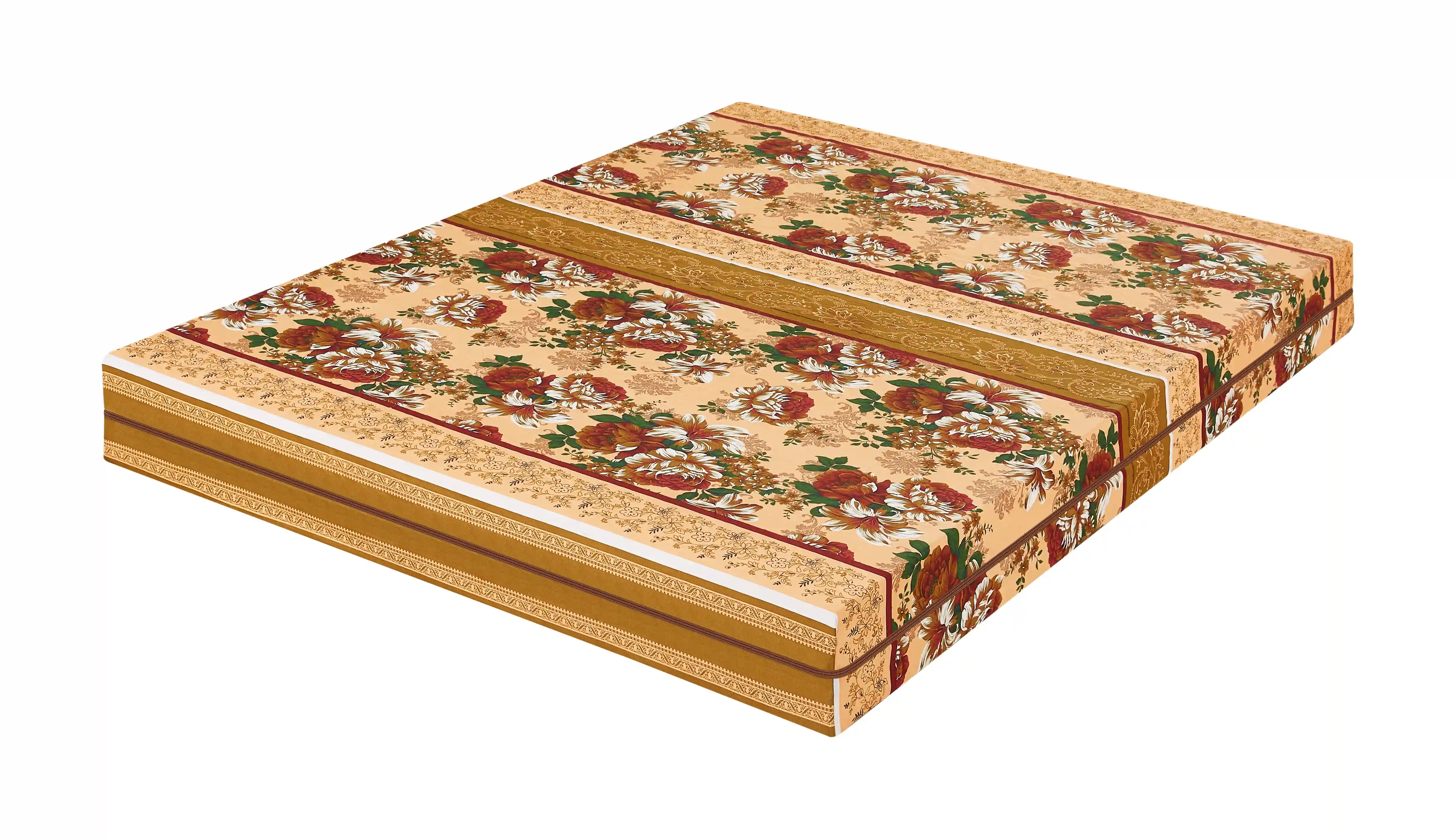
The supplied product notes point to a factory that works with mattress categories such as pocket spring, foam, rolled, and folded mattresses, and that can support OEM/ODM production. The pictured mattress itself is an upholstered rectangular unit with a floral printed fabric cover, straight stitched edges, and a medium-to-thick profile. The internal build is not visible, so it would be unwise to guess the core construction. Still, the outer format gives a useful clue: this is the kind of mattress that can be adapted for institutional bedding as well as residential or hospitality supply.
What institutional buyers usually need from a school mattress
School and dormitory buyers rarely want the fanciest mattress on the market. They usually want the one that will hold up, arrive on schedule, and be easy to manage after delivery. That sounds plain, but it is where many programs go wrong. A comfortable mattress is valuable, of course, but in a shared-use environment comfort has to sit beside durability, cleaning practicality, and replacement planning.
In a school setting, the mattress often needs to work across a long service life and under mixed use. That may include day students in hostels, boarding students, staff quarters, guest rooms, or temporary accommodation during events. The right specification often depends on the institution’s sleeping setup: bunk beds, single beds, narrow frames, metal bed bases, or storage beds. A factory that understands these use cases can guide buyers toward a more suitable product structure, even if the final design is fairly simple.
Reading the product correctly before placing a bulk order
The photographed mattress shows a decorative floral cover in beige, gold, red, green, and white, with a flat top and piped edges. That finish tells you something important: the factory can produce an upholstered mattress with a finished exterior rather than a bare utility core. For some institutional customers, that is enough. For others, the outer fabric must be more utilitarian, easier to wipe down, or better suited to high-turnover environments.
Because the core is not identifiable from the image, buyers should avoid assuming the mattress is spring, foam, or hybrid. The company notes mention several mattress types, which suggests flexibility in production, but the correct internal structure has to be confirmed in writing. That matters for weight, firmness, compression performance, packing method, and service life. A mattress with an appealing cover can still be the wrong buy if the internal build does not match the bed frame or the expected usage pattern.
Quick buyer takeaway
If you are comparing suppliers, do not stop at the surface fabric. Ask for the full build specification, size range, packing format, and whether the factory can make a Custom School mattress for your exact project. It is better to sort that out before production than after a sample has already been approved.
Factory capabilities that matter for school and dormitory programs
For institutional purchasing, the real value of a School mattress factory lies in repeatability. A buyer needs units that match from batch to batch, especially if the order will be phased in over several shipments. That means the factory should be able to maintain consistent sizing, stitch quality, foam or spring assembly methods, and cover application. Even small variations become obvious when mattresses are lined up in a dormitory or hostel.
The company notes mention production history dating back to 1986 and China manufacturing since 2013, along with OEM/ODM capability. Those are relevant because institutional buyers often need a supplier that can make changes without starting from scratch. For example, a school might request a specific mattress height to suit bunk rails, a different fabric aesthetic for a guest dorm, or packaging that reduces warehouse handling. A flexible factory can usually adapt more efficiently than a catalog-only vendor.
The notes also mention several company-level certifications, including CertiPUR-US, CE, BSCI, OEKO-TEX 100, Australia Recommended Choice, Ocean Cycle Certification, BS7177 Source 7, and ISO9001. These claims are helpful context, but buyers should still request the current documents and verify which certificates apply to the exact product they plan to purchase. In sourcing, paperwork should support the decision, not replace it.
Choosing the right mattress type for a school environment
Not every institution needs the same internal mattress build. The choice depends on budget, expected wear, and how the rooms are used. Foam mattresses can be practical where lighter weight and simpler handling matter. Pocket spring constructions may be preferred where support and resilience are a priority. Rolled or folded mattresses can help with shipping efficiency, though the buyer should confirm how the mattress recovers after unpacking and whether that format suits the school’s receiving process.
That flexibility is useful, but it also creates room for confusion. A buyer might see a pleasant cover sample and assume the mattress is suitable for the same purpose across multiple room types. In reality, a hostel bed, a guest room bed, and a staff accommodation bed may need different firmness levels or handling characteristics. A good factory will not force one construction into every use case.
Useful questions to ask a supplier
What mattress sizes can you produce consistently? Can you supply matching sets for the full order? What is the internal structure, and can it be documented for procurement review? Can the mattress be packed in a way that works for the school’s warehouse and campus delivery plan? If the answer to those questions is vague, keep looking.
Custom School mattress orders: where customization actually helps
Customization is most useful when it solves a real operational problem. For institutional buyers, that might mean a mattress profile that fits a specific bed frame, a cover fabric that better matches the facility’s interior requirements, or a construction that balances comfort with easy turnover. A Custom School mattress does not need to be exotic to be valuable. In fact, the best customizations are often the least glamorous ones.
One practical example is size control. Schools often work with nonstandard beds or legacy furniture, and forcing a standard retail size into those frames can create gaps, movement, or uneven wear. Another is packing format. If the warehouse team is dealing with limited storage, rolled or folded delivery may reduce handling pain. On the other hand, if the school wants to inspect every mattress before distribution, compressed packaging may not be the best route. There is no universal answer.
Fabric choice also deserves attention. The pictured floral cover is decorative, which may suit guest rooms or residential-style settings. For heavier-duty institutional use, a buyer may prefer a plainer, more practical textile. This is where a factory’s OEM/ODM experience becomes useful: the same basic manufacturing capability can support different outer appearances without changing the procurement logic from scratch.
Common mistakes in school mattress sourcing
The first mistake is focusing on unit price alone. A mattress that looks inexpensive can become costly if it wears out early or is difficult to move and store. The second mistake is approving a sample without checking the build details that matter later. If the exact foam type, spring style, or cover specification is not documented, the bulk order may not match expectations.
A third mistake is underestimating the campus environment. Mattresses in schools and dormitories may see frequent room turnovers, inconsistent user behavior, and heavier-than-average wear. A product that is perfectly acceptable in a low-turnover guest room may not be the best choice for a boarding house or student residence. Small details, such as edge stability and stitched perimeter finish, can matter more than buyers expect.
There is also a tendency to ignore logistics until the end. If the mattresses are large, heavy, or awkwardly packed, the receiving team can end up wasting time on the floor. That is a practical problem, not a theoretical one. Good suppliers think about the journey from factory to bed frame, not only the product on the showroom platform.
How to evaluate a school mattress factory before committing
Start with product clarity. Ask for the exact model structure, dimensions, available constructions, and packaging format. Then move to production capability: can the factory handle repeat orders, custom sizes, and consistent finish quality? After that, review the documentation that supports your internal approval process, especially if the mattresses are going into schools, hostels, or public institutions with procurement controls.
It is also sensible to ask how the factory manages variations between sample and mass production. That question may seem blunt, but it saves time later. A supplier that produces for OEM/ODM programs should be comfortable explaining what is fixed, what is customizable, and what can change only by agreement. If the answer sounds improvised, the project probably is not as mature as it should be.
Practical advice for sourcing managers and product teams
For buyers, the best approach is to define the use case first and the mattress second. Is this for boarding schools, dormitories, staff housing, or guest accommodation? Will the product be moved often? Does the institution need a decorative finish, or is a more utilitarian fabric better? Once those answers are clear, supplier comparison becomes much easier.
For product teams working with a School mattress factory, sample approval should include more than a visual check. Confirm the mattress height, edge finish, packing method, and whether the delivered construction matches the agreed specification. If the factory offers a Custom School mattress program, use it to solve the institutional problem in front of you, not to add unnecessary complexity.
A final caution: do not assume that company-level claims automatically apply to every order line. Certifications, production histories, and factory capabilities are useful signals, but they still need to be matched to the exact mattress being purchased. That is standard sourcing discipline, and it pays off.
FAQ for school and dormitory mattress buyers
Can one factory supply different mattress constructions?
Yes, many can, especially those with OEM/ODM experience. The company notes here suggest the ability to produce pocket spring, foam, rolled, and folded mattresses, though the exact construction of the pictured unit is not identified.
Is a decorative mattress cover suitable for schools?
Sometimes. It depends on the setting. A decorative cover may work well in guest rooms or residential-style accommodation, but high-turnover institutional spaces may benefit from a more practical finish.
What should be confirmed before ordering in bulk?
Confirm size, internal build, firmness target if relevant, packaging format, and whether the factory can repeat the specification consistently across the full order.
Next step for buyers
If you are comparing suppliers for institutional bedding, ask for a full product specification rather than relying on a single image. A capable School mattress factory should be able to explain material options, cover choices, packing formats, and customization paths for your project. That is the difference between a mattress that merely arrives and one that actually suits the building it will live in.
For schools, dormitories, and bulk accommodation projects, the smartest purchase is usually the one that is easiest to standardize, inspect, and replace later. If a supplier can support that process with clear OEM/ODM communication and a realistic Custom School mattress option, you are already ahead of most buyers.