Why a custom bed frame manufacturer matters in real buying decisions
If you are sourcing a custom bed frame manufacturer, you are usually not just buying a frame. You are trying to solve a room concept, a durability question, and a procurement problem at the same time. For hotels, serviced apartments, rental operators, and retail brands, the bed is one of the first things a guest or customer notices, and one of the last things they forget if it feels flimsy, mismatched, or hard to maintain. That is why a complete upholstered bed set, especially one paired with an integrated mattress, often sits at the center of the specification.
The practical challenge is simple enough to state and harder to execute: you need a bed that looks consistent, ships efficiently, meets the target market’s expectations, and can be produced repeatedly without drift in finish or fit. A custom bed frame manufacturer can help with that, but only if the buyer knows what to ask for and where the hidden risks are. The wrong choice can create problems in assembly, cleaning, storage, and replacement cycles. The right choice gives you a controllable product platform instead of a one-off furniture gamble.
What a modern upholstered bed set usually includes
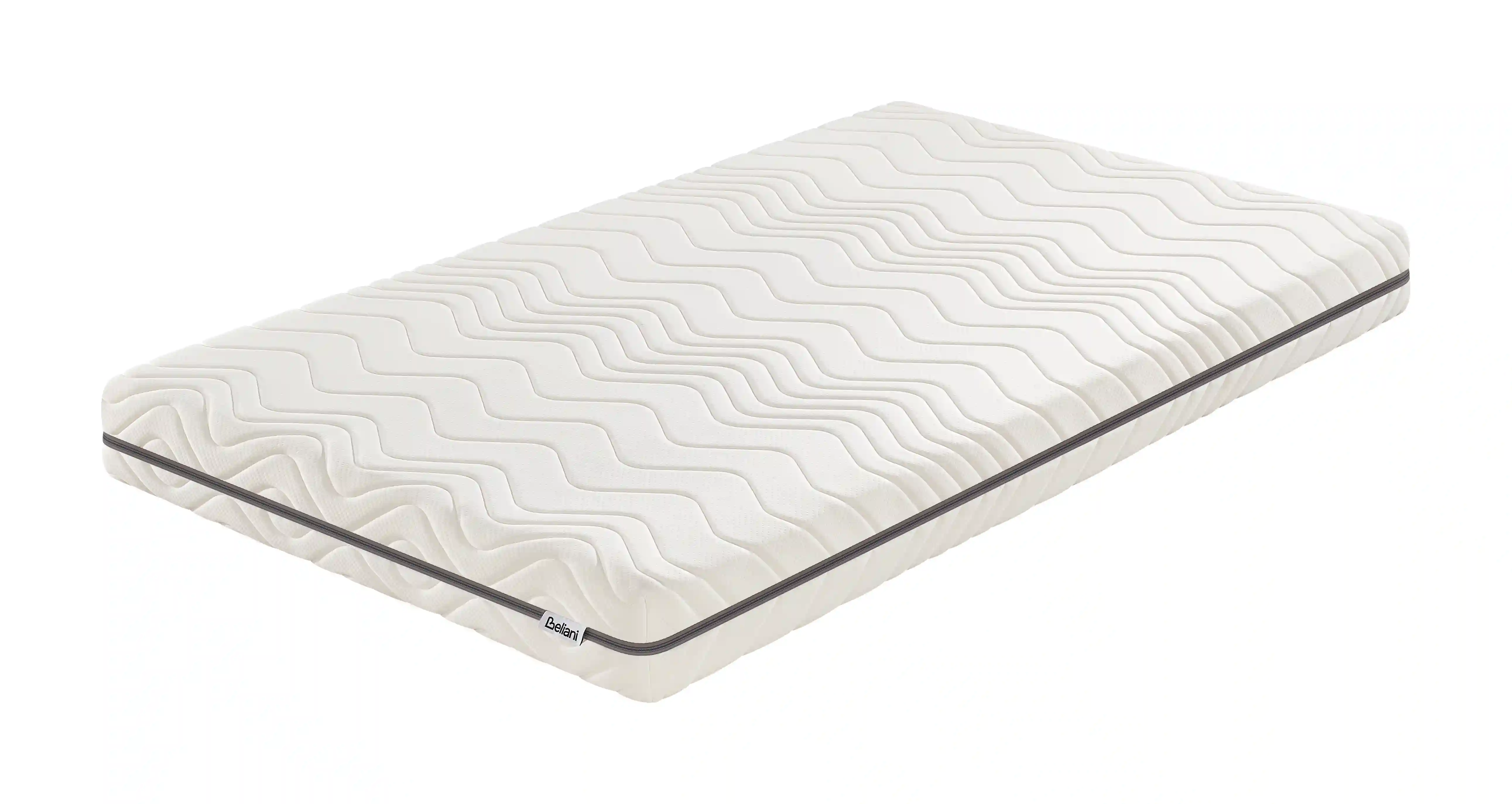
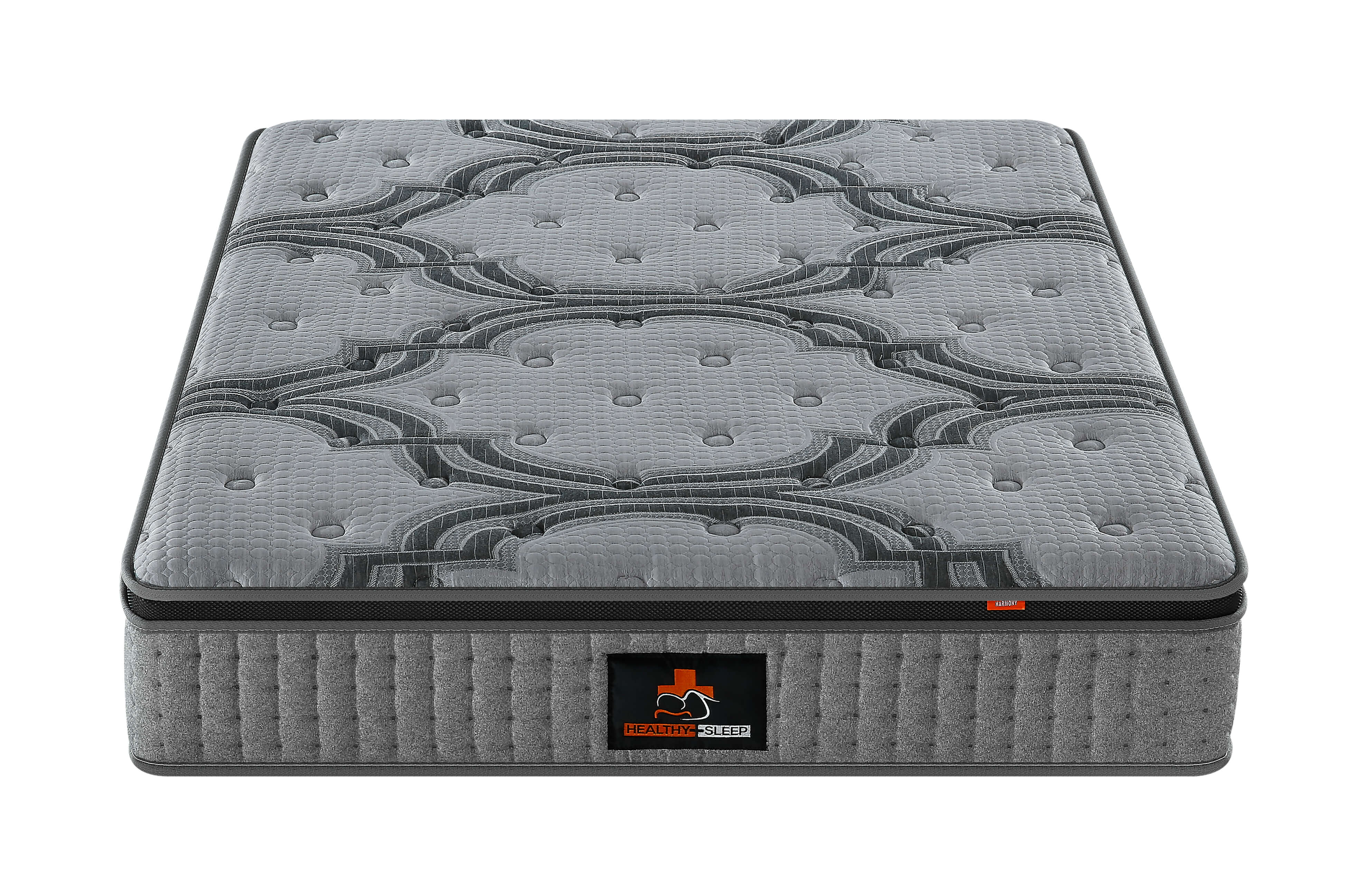
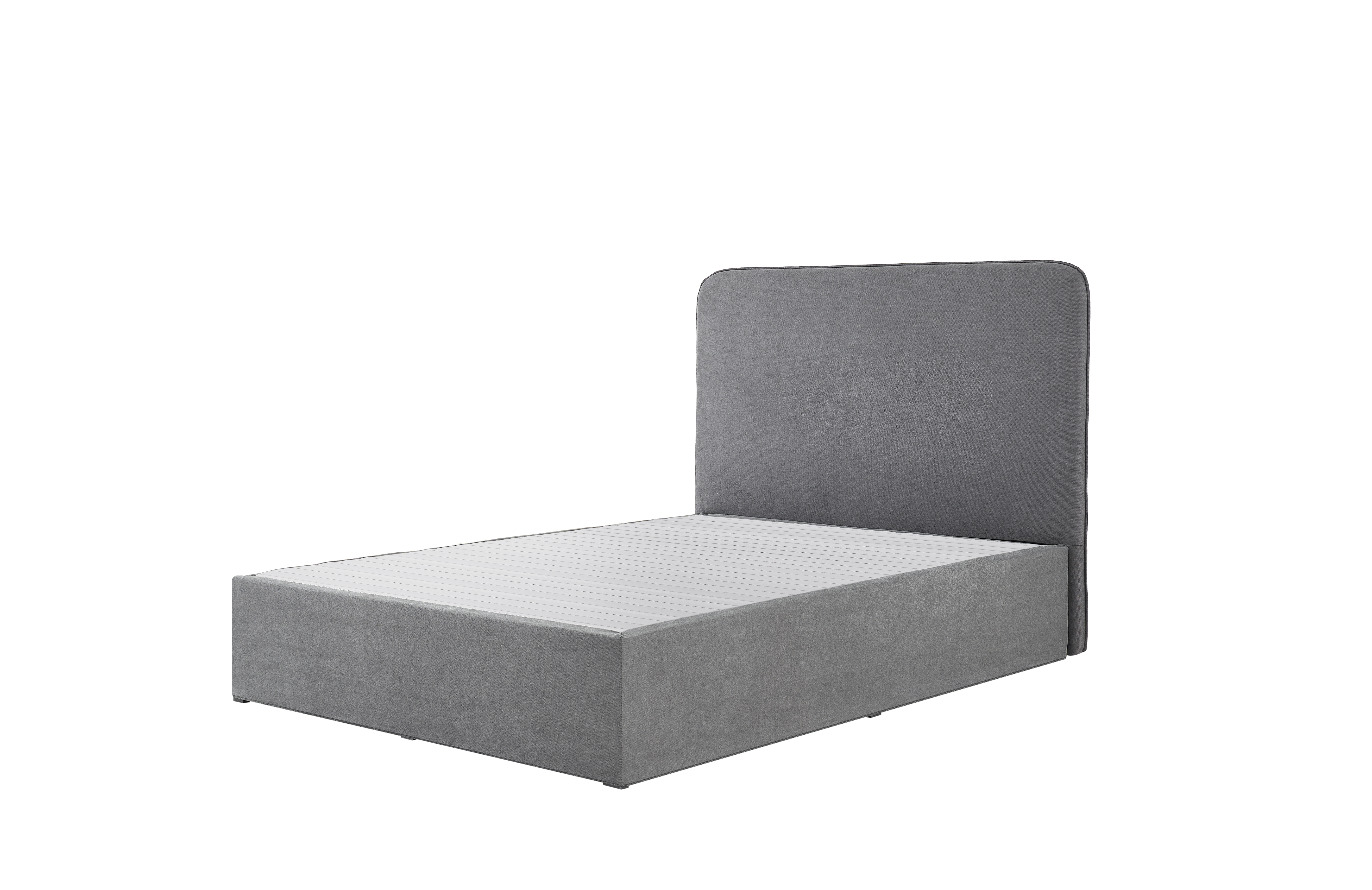
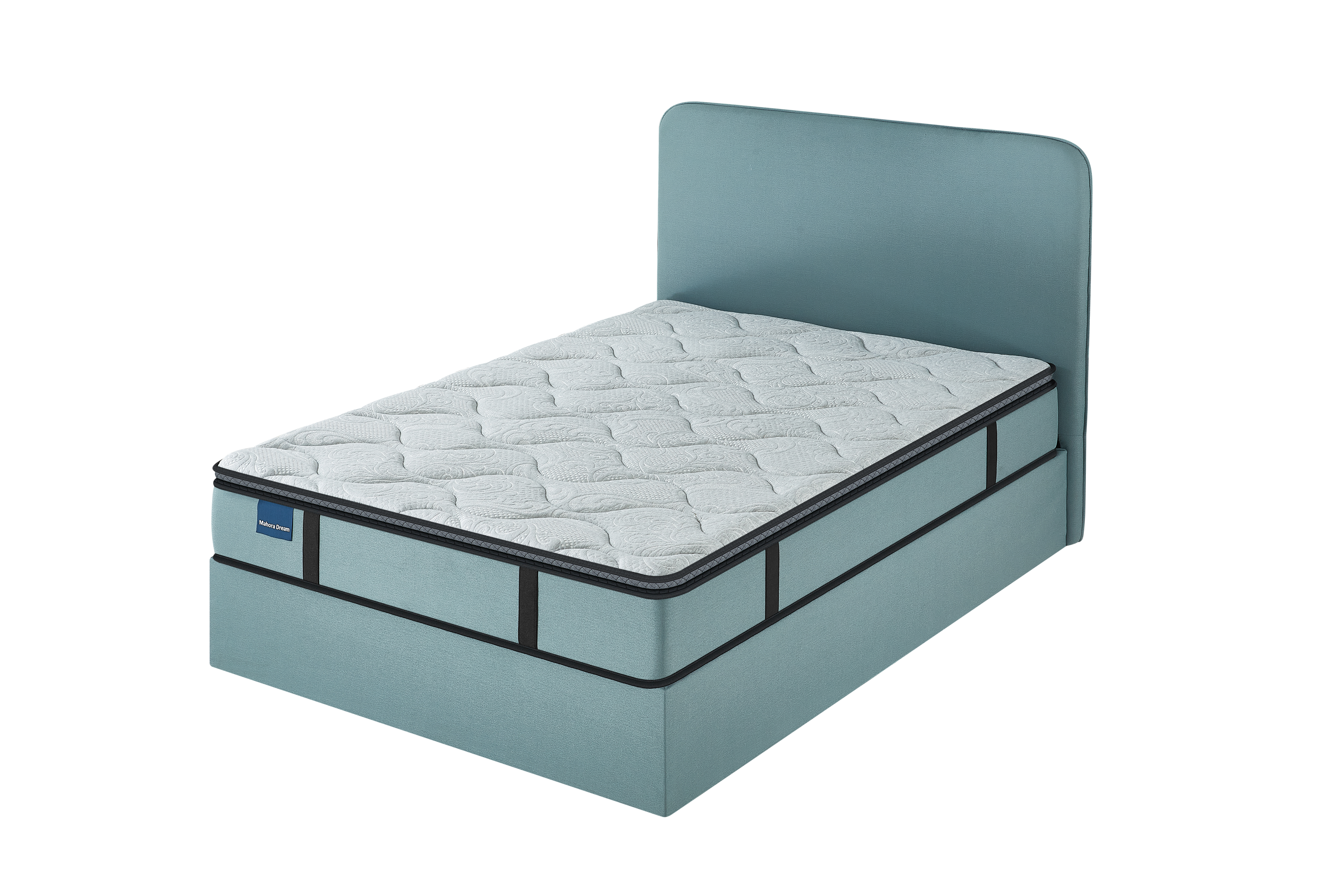
The product described here is a complete bed set: an upholstered bed base, a tall upholstered headboard, and a matching mattress. Visually, the design is clean and restrained. The base has a boxy platform profile with dark edge trim and vertical black accent bands, while the headboard is tall, rectangular, and softly rounded at the corners. The mattress has a quilted top panel, which is common in residential and hospitality applications because it reads as finished without being ornate.
That kind of set matters because buyers rarely purchase only the visible frame anymore. They purchase a sleep package. In commercial projects, that can reduce mismatch between bed base height, mattress depth, and headboard proportion. In retail, it can simplify the buying decision. A coordinated set also helps standardize the look across rooms, which is especially useful in hotels, guest rooms, and furnished rentals where consistency beats novelty.
What is visible, and what is not
From the product notes, the visible outer upholstery appears to be a light blue or teal woven textile or microfiber, though the exact fiber is not specified. The mattress cover looks quilted and patterned, but the internal construction is not visible. It could be foam, pocket spring, hybrid, or another common mattress structure; a buyer should not assume any of those without the specification sheet. That caution sounds obvious, but it is where a lot of sourcing mistakes begin.
ODM bed frame factory or fully custom build?
Buyers often use the terms interchangeably, but they are not the same job. An ODM bed frame factory typically offers existing platforms that can be adapted: dimensions, upholstery color, stitch pattern, headboard shape, trim details, packaging, and labeling. A fully custom bed frame manufacturer goes further and helps develop a new structure, new panel geometry, or a new assembly logic from the ground up. Which route makes sense depends on volume, budget, and how differentiated the final product needs to be.
For many B2B buyers, ODM is the more practical starting point. It shortens development time and lowers risk. You can still get a tailored appearance without reinventing the structure. If your business needs a signature silhouette, a special contract-grade finish, or a nonstandard room package, then deeper customization may be justified. The key is to understand whether you are asking for a cosmetic variation or an engineering change. Those are priced and managed very differently.
Selection criteria that matter more than the brochure language
When evaluating suppliers, the first impulse is often to look at photos. That is useful, but it only answers the least important question. The more useful questions are about repeatability, material control, and how the bed will behave in daily use. A bed with a neat upholstered exterior can still disappoint if the edge bands loosen, the headboard squashes out, or the mattress and base proportions look awkward once installed in a room with different flooring and wall colors.
1. Construction clarity
Ask what the base is made of, how it is reinforced, and whether the frame uses wood, metal, engineered board, or a combination. The product notes here do not specify the hidden structure, so a buyer should request drawings or cutaway details before committing. Upholstery hides a lot, and not always in a good way.
2. Upholstery consistency
For a bed that will be repeated across multiple units, the color and texture of the fabric matter almost as much as the geometry. A teal or light blue upholstery can read elegant in a controlled setting, but it may also show lint, shade variation, or lighting differences more readily than a darker finish. Ask for lab dips or approved swatches, and make sure the sample is viewed under the same lighting conditions that matter to your project.
3. Headboard proportion
The tall rectangular headboard in the example is visually calm, which is a plus for hospitality and minimalist retail collections. But height, thickness, and edge radius affect both style and comfort. If the bed is intended for reading or TV use, the upper edge and backing need to be comfortable enough for real contact, not just for photography.
4. Mattress compatibility
Because the mattress is shown as part of the set, buyers should confirm the intended mattress structure and firmness range. A visually attractive frame can still create an unsatisfactory sleep system if the mattress sits too high, too low, or too softly relative to the base. The quilted surface suggests a finished consumer-facing product, but that alone tells you nothing about internal support.
Why this style works well in hospitality and furnished housing
A coordinated upholstered bed base and mattress set has practical advantages beyond appearance. It installs as a unified composition, which reduces the chance of a mismatched frame and mattress appearing in the same room. It also gives procurement teams a cleaner spec to manage. In hospitality, where room photos and guest expectations carry real commercial weight, that matters more than many furniture buyers admit at first.
The design shown here is especially suited to guest rooms, rental properties, and serviced apartments because it is restrained. There are no busy visual cues, no exposed slats, and no decorative excess that will date quickly. The dark trim gives the base a defined edge, which helps the bed read as intentional rather than generic. That said, restrained design is not the same as indestructible design. Contract buyers still need to check cleaning methods, abrasion resistance, and how the upholstery holds up around corners and high-contact zones.
Manufacturing details buyers should clarify early
If you are talking to a custom bed frame manufacturer, the early conversation should cover more than color and size. It should cover the things that are hardest to change later. Once production starts, even minor design shifts can affect stitching patterns, packaging dimensions, carton count, and assembly time. That is where projects slip.
Useful questions include: Does the bed ship assembled or flat-packed? Is the headboard attached or separate? Are the corner radii fixed? Is the black edge detailing piping, a webbing band, or a decorative overlay? What is the upholstery maintenance recommendation? Are replacement covers available? If the supplier also handles mattress OEM or ODM work, can the mattress be tuned to the same room package so the whole bed set feels coherent in use?
Some manufacturers note certifications such as CertiPUR-US, CE, BSCI, OEKO-TEX 100, Australia Recommended Choice, Ocean Cycle Certification, BS7177 Source 7, and ISO9001. Those claims may be relevant if they are current and documented, but buyers should still request the underlying certificates and scope. Certification names sound reassuring, yet scope and validity are what count.
Common mistakes in bed frame sourcing
The most common mistake is treating the frame as a styling decision only. It is not. It is also a logistics object, a wear surface, and a cost driver. A second mistake is approving a sample that looks good in a showroom but is not realistic for the intended use case. A third is assuming the mattress will “work itself out” once placed on the base. In practice, the mattress and frame must be designed together, especially when the set is sold or installed as a complete unit.
Another issue is underestimating maintenance. Upholstered furniture always needs an honest cleaning plan. Light colors look attractive, but they are less forgiving in high-turnover environments. If the project is a rental or hotel application, ask what cleaning agents are safe and how repairs are handled after scuffs, seam wear, or corner damage. Buyers often overlook this until the first complaint comes in.
Practical buyer advice before you issue an order
Start with the room, not the catalog. Measure clearance, bedside furniture, and the visual weight of the headboard against the wall treatment. Then define the use case: residential resale, short-stay rental, or hospitality procurement. The same bed can be specified very differently depending on how often it will be moved, cleaned, or replaced.
Request a sample or prototype if possible, and review it in the lighting conditions where it will actually be seen. Ask for packaging details, assembly time expectations, and replacement-part policy. If the factory can do both bed frames and mattresses, that can simplify coordination, but only if one side is not dragging the other into delay. In sourcing, integrated capability is helpful; sloppy coordination is not.
FAQ for sourcing teams
Can one supplier handle both the bed frame and mattress?
Yes, and that is often preferable for a complete bed set. It can improve compatibility and simplify procurement, provided the supplier has genuine mattress and furniture capability rather than just broad catalog labeling.
Is an upholstered bed base suitable for hotels?
Often, yes. Upholstered beds are common in hospitality because they look finished and comfortable. The important point is choosing materials and construction appropriate for turnover, cleaning, and repeated use.
Should I choose ODM or fully custom development?
If you want faster launch and moderate differentiation, ODM is usually the sensible route. If you need a distinctive platform or a contract-specific design, full customization may be worth the longer development cycle.
What to ask next
If you are evaluating a custom bed frame manufacturer now, ask for the structure spec, upholstery options, mattress construction details, certification documents, and a clear explanation of what is standard versus what is customizable. That will tell you far more than a polished product photo ever will.
For sourcing teams building a bedroom program, the next step is usually a sample review against room drawings and a short list of acceptable upholstery and mattress configurations. That is where the real decision gets made: not whether the bed looks good in isolation, but whether it performs as part of a repeatable, sellable, and maintainable product package.