Why buyers search for a School mattress factory
When procurement teams look for a School mattress factory, they are usually not just comparing unit prices. They are trying to solve a much broader problem: how to source mattresses that can survive heavy use, fit institutional budgets, and still meet the practical expectations of students, dormitory operators, and facility managers. In school housing, the mattress is not a decorative item. It is part of a system that has to hold up under frequent turnover, tight cleaning routines, and the occasional rough handling that comes with shared living environments.
That is why the buying decision is different from retail bedding. A mattress for a campus dorm, boarding school, hostel, or other institutional accommodation has to make sense at scale. Buyers need to think about product construction, logistics, hygiene, durability, and whether a supplier can support repeat orders without changing the specification halfway through a program. If you are comparing a standard catalog model with a Custom School mattress, the question is not only what looks comfortable on paper. It is whether the product can be manufactured consistently and delivered in a form that works inside a school operation.
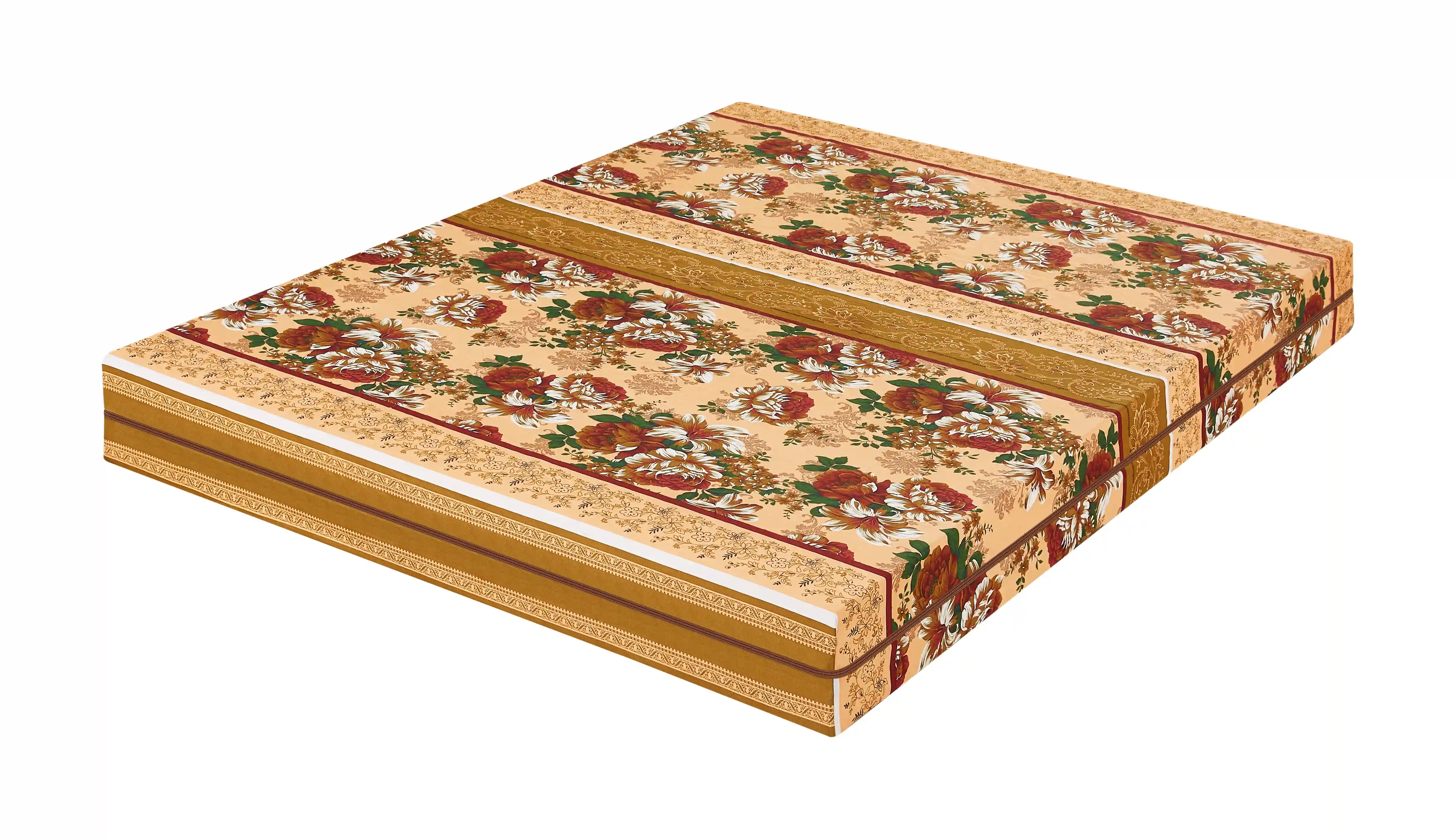
The supplied product notes point to a finished rectangular mattress with a printed floral cover, rounded corners, and a medium-to-thick profile. The internal build is not visible, so the exact mattress type cannot be confirmed from the image alone. That is a useful reminder for buyers: the cover can tell you something about presentation, but it does not tell you enough about support, density, or service life.
What institutional buyers should compare first
The fastest way to narrow suppliers is to compare the things that affect day-to-day use, not just the catalog language.
1. Construction type
A school mattress may be foam, pocket spring, innerspring, folded, rolled, or hybrid. Each has tradeoffs. Foam models are often easier to handle and can be useful where weight matters. Spring-based models may offer better airflow and a more traditional feel. For institutions, the real question is which construction matches the expected load, cleaning routine, and storage method.
If the supplier offers OEM/ODM service, ask how much of the construction can be changed without affecting the production line. This matters when a school system wants one mattress for dormitories and another for teacher housing or guest rooms.
2. Cover and hygiene features
The visible sample shows a printed textile cover with a decorative floral pattern. That may be suitable for retail presentation, but for institutions the cover spec deserves more attention than the print. Buyers should ask about the fabric type, breathability, cleaning method, and whether the cover is removable or washable. These details are easy to overlook at the quotation stage and expensive to ignore later.
3. Durability under shared-use conditions
A mattress used in school accommodation rarely gets the gentle treatment of a home bedroom. It is moved, rotated, stacked, and sometimes stored between terms. Construction consistency matters more than showroom softness. If a supplier can explain how the mattress is reinforced, quilted, or assembled for repeated use, that is a better sign than a polished product photo.
4. Compliance and documentation
The supplied notes mention certifications such as CertiPUR-US, CE, BSCI, OEKO-TEX 100, Australia Recommended Choice, Ocean Cycle Certification, BS7177 Source 7, and ISO9001. These are supplier claims in the preparation data, not something visible in the image. Still, for institutional purchasing, documentation can be decisive. Buyers should request current proof for any standard they need, and verify that the exact product line covered by the certificate matches the mattress being quoted.
Why custom manufacturing matters in school bedding
A Custom School mattress is often more useful than a generic retail mattress because school programs rarely have one universal requirement. Dormitories, boarding houses, staff housing, and temporary student accommodation may all need different specifications.
One dorm might prioritize easier handling and lower cost. Another may need a thicker mattress with a firmer feel. A boarding school may want consistent sizing so that replacement units can be swapped without complications. In some projects, the visual appearance also matters, especially if the mattress is used in a room where the bed is visible to parents, guests, or accreditation reviewers.
OEM and ODM support can be valuable here. The notes indicate that OEM and ODM are welcomed, which suggests the factory is set up to produce branded or private-label bedding. For buyers, that can mean more control over fabric, size, packaging, and logo placement. It can also mean more responsibility. The more custom the order, the more important it becomes to lock down the specification before production starts.
Practical warning: do not judge mattress quality by the cover alone
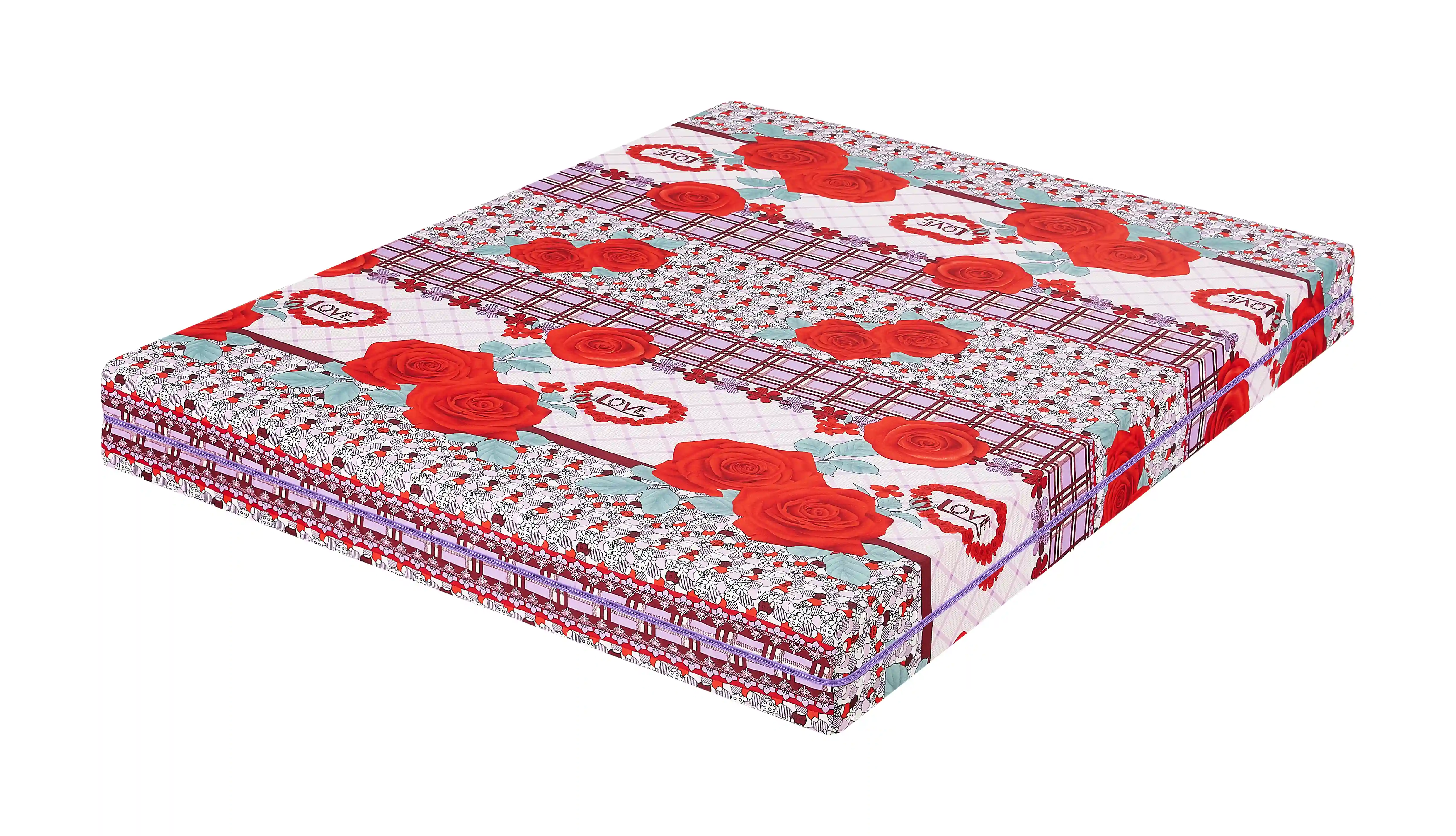
The photo description shows a decorative floral cover with red roses and stripe detailing. It looks finished and presentable, but that tells you very little about internal quality. A mattress can look attractive on the outside and still be a poor fit for institutional use if the fill, support core, or edge construction is weak.
That is one of the more common mistakes in bedding procurement: buying from the sample image instead of the technical sheet. For schools, the outer appearance matters less than the way the mattress performs after repeated use. Ask for the build description, the available sizes, the packaging method, and the production consistency across batches. If the supplier cannot explain the internal construction clearly, that is a warning sign.
What the supplied company notes suggest
The preparation data says the company manufactures foam mattresses, pocket spring mattresses, folded and rolled mattresses, mattress toppers, baby mattresses, and prison mattresses. It also notes manufacturing since 1986, with production in China since 2013. Those are not image-based facts, but they do hint at a supplier profile that understands institutional bedding and mixed-use mattress production.
That mix is relevant. A factory that already serves baby, prison, and institutional segments is more likely to understand the handling and compliance pressures that schools face. Still, buyers should not assume every product line is interchangeable. A foam mattress for one sector may not be appropriate for another. Ask for the exact line that is intended for your use case rather than relying on the broader company profile.
Selection criteria that matter in real purchasing
A school sourcing team usually needs a decision that balances comfort, durability, and logistics. A few criteria tend to matter more than the rest:
Size consistency: institutional beds often require uniform dimensions so replacement units fit properly.
Packaging format: rolled or compressed mattresses may reduce freight cost, but only if the product is designed for that method.
Weight and handling: heavy mattresses can be harder for housekeeping staff to rotate and replace.
Cover finish: decorative covers may be fine for some settings, while more neutral or practical fabrics may fit others better.
Repeatability: the real test of a supplier is whether the 50th mattress matches the first one closely enough for batch use.
If your program is for a dorm or boarding facility, it is worth asking how the factory manages lot-to-lot consistency. That is not glamorous, but it is exactly where institutional orders succeed or fail.
Common mistakes when sourcing from a School mattress factory
One mistake is over-specifying where it does not help. Buyers sometimes add too many optional features and create a mattress that is expensive, hard to produce, or awkward to maintain. Another is under-specifying the important details, such as firmness intent, cover material, packaging, and labeling.
A third mistake is forgetting the end user. School bedding is often selected by procurement teams, but used by students who care most about sleep quality and thermal comfort. The mattress must be practical for maintenance staff and acceptable for daily sleeping. That balance is not always easy to strike.
There is also a logistics issue. If the product is shipped in compressed or rolled form, make sure the receiving site understands the unpacking and recovery process. It is a small operational detail, but in a large institution, small details tend to multiply.
FAQ for institutional mattress buyers
Is a School mattress factory only for schools?
Not necessarily. The same manufacturing capability may serve dormitories, hostels, hotels, worker housing, and other institutional accommodation. The school use case simply puts extra emphasis on durability, consistency, and bulk ordering.
Should I choose foam or spring?
It depends on the environment, handling needs, and target feel. Foam can be easier to manage. Spring constructions may offer different support and airflow characteristics. Ask the supplier to explain the practical differences for your use case rather than relying on broad claims.
What should I request before placing a large order?
Request the exact specification, available sizes, cover description, packaging format, certificate copies if needed, and a clear statement on OEM/ODM options. If the product is custom, confirm artwork, labeling, and carton requirements before production.
Next step for buyers
If you are shortlisting a School mattress factory, begin with the technical sheet, not the product photo. Then compare the supplier’s ability to make a Custom School mattress that fits your site, your budget, and your maintenance routine. The right factory should be able to explain construction, packaging, and consistency in plain language. If they cannot do that early, the project usually becomes harder later.
A good institutional mattress purchase is rarely the cheapest one on paper. It is the one that arrives on time, performs consistently, and does not create extra work for the people responsible for beds, cleaning, and replacement cycles. That is the standard worth holding the factory to.